

Level Ground That Drains Correctly Every Time
Commercial Grading in Brighton for building pads, parking areas, and access roads where water pooling causes project delays
Rocky Ground LLC provides commercial grading services in Brighton for construction sites that require precise leveling, slope establishment, and drainage control. You need grading work that prepares building pads, parking lots, and access roads so water moves away from structures and paved surfaces remain stable over time. Whether you are developing a retail center, industrial facility, or multi-unit residential project, grading is the step that determines whether your site drains correctly and whether later construction phases can proceed without water-related issues.
Commercial grading involves shaping the ground to match engineering specifications, establishing slopes that direct stormwater toward drainage systems, and compacting soil to support the weight of buildings and vehicles. In Brighton, grading work must account for soil composition, existing drainage patterns, and how seasonal weather affects site conditions. The team uses GPS-guided equipment and laser levels to achieve the grades shown on civil drawings, ensuring that finished elevations match design requirements before asphalt, concrete, or structural foundations are installed.
If your commercial project requires grading that supports both construction timelines and long-term site performance, contact Rocky Ground LLC to review site plans and coordinate grading work with your development schedule.
Why Precision Grading Prevents Future Site Problems
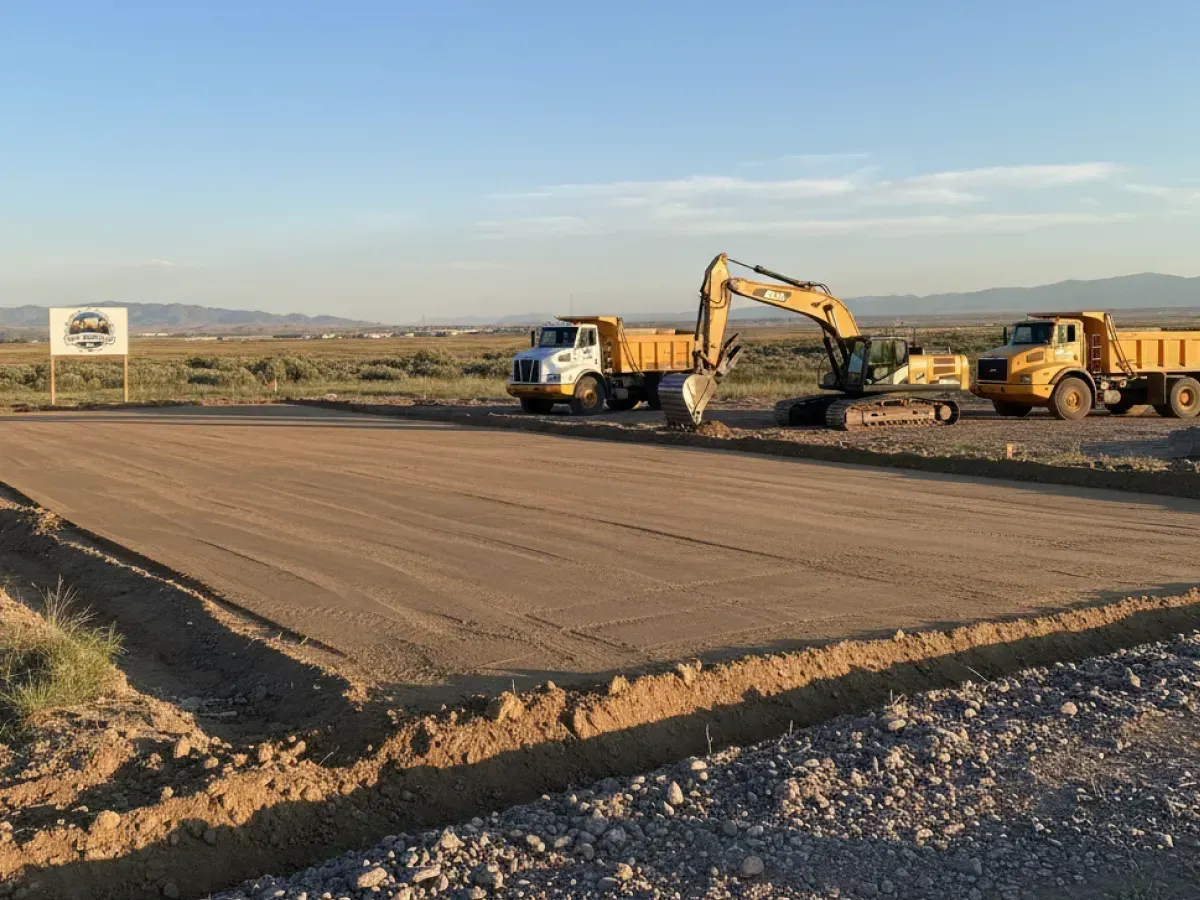
You need grading work that creates stable, well-drained surfaces so your buildings, parking areas, and access routes perform as designed. The process begins with reviewing civil plans and identifying finish grades, drainage slopes, and compaction requirements. Heavy equipment such as bulldozers, motor graders, and compactors shape the soil, remove high spots, fill low areas, and establish the contours that guide water flow across the site.
After grading is complete, you will see a site where water moves toward designated drainage points instead of pooling near foundations or paved surfaces, and soil is compacted to support structural loads without settling. Rocky Ground LLC ensures that finished grades match the elevations and slopes specified in your construction documents, so paving contractors, concrete crews, and utility installers can begin their work without delays caused by incorrect elevations or inadequate drainage.
Grading does not include paving, concrete placement, or drainage system installation. The work focuses on preparing the ground to the correct shape and compaction so other trades can build on a stable, properly sloped surface. Projects that involve poor soil, existing utilities, or significant elevation changes may require additional fill material, geotechnical testing, or coordination with engineers.
What to Expect During Commercial Grading
Commercial grading projects vary in complexity depending on site size, topography, and how drainage must be managed to meet local regulations. The following questions address common concerns about the process, equipment, and coordination involved.
What equipment is used for commercial grading?
Bulldozers and motor graders establish rough and finish grades, while compactors and rollers densify soil to meet engineering specifications for load-bearing capacity.
How long does grading take for a commercial site?
A typical commercial lot may require one to two weeks for rough and finish grading depending on site size, soil conditions, and whether fill material must be imported or excess soil removed.
Why does slope matter for drainage?
Proper slope directs stormwater away from buildings and prevents pooling that can undermine foundations, damage paving, or create standing water that attracts mosquitoes and accelerates surface deterioration.
When should grading be scheduled?
Grading typically follows clearing and excavation and precedes paving, concrete work, and building construction, so timing must align with contractor schedules and permit inspections in Brighton.
What happens if grading reveals poor soil?
Unsuitable soil may need to be removed and replaced with engineered fill, or geotechnical engineers may recommend soil stabilization methods to achieve required compaction and load-bearing capacity.
Commercial grading provides the foundation for safe, functional, and long-lasting site development, and accurate work prevents expensive corrections during later construction phases. If your project requires grading that meets engineering standards and supports your construction timeline in Brighton, reach out to Rocky Ground LLC to review your plans and confirm equipment availability and scheduling.